MINIMALLY INVASIVE CARE
Colonoscopy
A minimally invasive endoscopic examination of the colon, rectum and caecum to investigate large intestinal disease.
What is Colonoscopy?
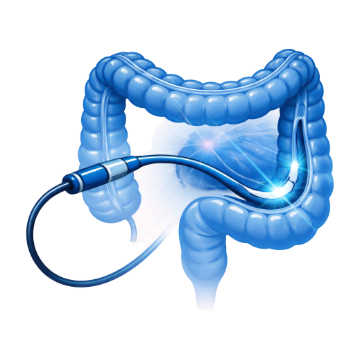
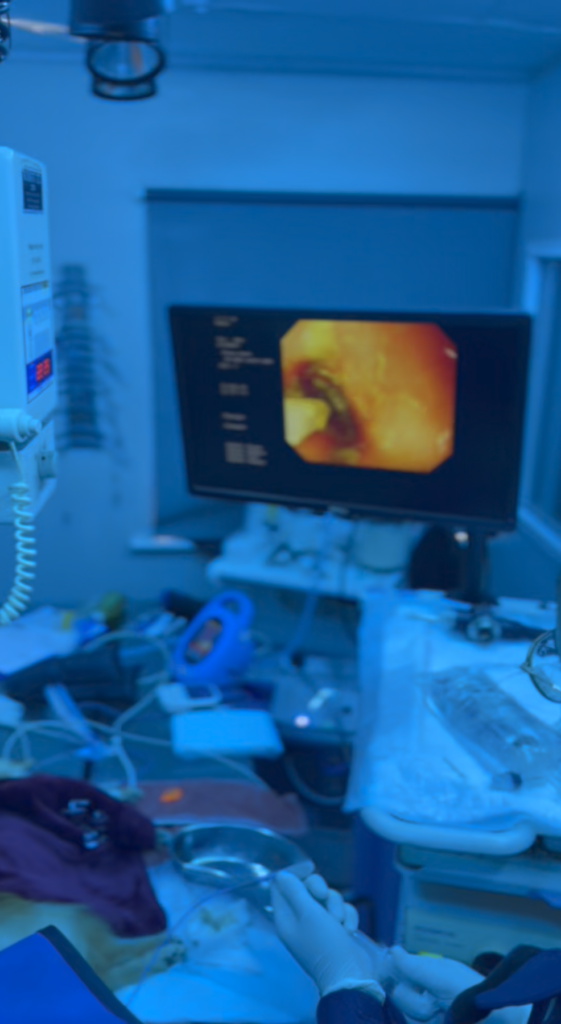
Colonoscopy is a minimally invasive endoscopic procedure used to examine the lower gastrointestinal tract including the colon, rectum, caecum and anus. Using a flexible endoscope, the team can directly visualise the inner lining (mucosa) of the large intestine and obtain biopsy samples for accurate diagnosis.
Because of the relatively simple structure of the lower GI tract, it is one of the most effective tools for investigating large intestinal disease. It is performed under general anaesthesia following fasting and bowel preparation, is well tolerated and carries a low risk of complications.
Key Benefits
Why this minimally invasive approach is the right choice for your pet.
No open surgery
Full visualisation of the mucosa without abdominal surgery.
Accurate biopsies
Multiple targeted samples support a definitive diagnosis.
Lower risk
Lower risk and faster recovery than surgical exploration.
In Detail
A closer look at how this procedure works and what it can diagnose and treat.
Why it is important
Diseases affecting the large intestine often cause persistent or recurrent clinical signs that may be difficult to diagnose using non-invasive methods alone.
Understanding the large intestine
The large intestine in dogs and cats consists of the caecum, the colon (ascending, transverse and descending), and the rectum and anus.
An important anatomical landmark is the ileocaecocolic junction, where the small intestine connects to the large intestine. This area is often assessed during colonoscopy and plays a key role in diagnostic evaluation.
Diagnostic capabilities
Procedure and preparation
Colonoscopy is performed under general anaesthesia. Preparation is important and typically includes fasting and bowel preparation to clear intestinal contents. The procedure is well tolerated and carries a low risk of complications.
What to Expect
Initial Investigations
We review history and run initial, non-invasive tests and imaging to confirm the procedure is appropriate and safe.
General Anaesthesia
Your pet is placed under general anaesthesia and carefully monitored to ensure comfort and safety.
Endoscopic Examination
The endoscope is gently introduced and the relevant structures are examined in high detail.
Sampling & Treatment
Biopsies or treatment are carried out during the same procedure where needed, and findings are discussed with you.
At a Glance
Anaesthesia
General
Approach
Minimally invasive
Preparation
Fasting & bowel prep
Recovery
Faster than surgery
When it is recommended
Frequently Asked Questions
Ready to book Colonoscopy?
Speak with our team about your pet’s care and the right diagnostic approach.