MINIMALLY INVASIVE CARE
Laparoscopy
Minimally invasive “keyhole” surgery to diagnose and treat abdominal conditions with small incisions and a high-definition camera.
What is Laparoscopy?
Laparoscopy is a modern, minimally invasive surgical technique used to diagnose and treat abdominal conditions in dogs and cats. Unlike traditional open surgery (exploratory laparotomy), it uses small incisions and a high-definition camera (endoscope) to examine internal organs with exceptional precision.
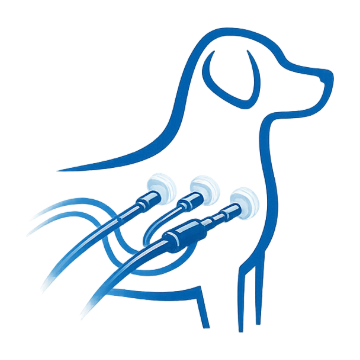
A small incision is made to insert the laparoscope, the abdomen is gently inflated with carbon dioxide to create working space, and instruments are introduced through tiny ports. It provides high-quality organ biopsies larger and more reliable than needle samples with bleeding controlled immediately, less pain and shorter hospital stays.

Key Benefits
Why this minimally invasive approach is the right choice for your pet.
Keyhole incisions
Small incisions instead of large surgical openings.
Less pain, faster recovery
Reduced trauma, lower infection risk and shorter hospital stays.
Better biopsies
Larger, more reliable samples than needle biopsy, with bleeding controlled immediately.
In Detail
A closer look at how this procedure works and what it can diagnose and treat.
Why choose it over traditional surgery
Traditional exploratory surgery can be highly invasive, especially for pets that are already unwell, requiring large incisions and longer recovery. Laparoscopy offers a safer, less traumatic alternative.
Advanced diagnostic accuracy
A major advantage is the ability to obtain high-quality biopsy samples directly from organs such as the liver, kidneys or intestines. Compared to needle (percutaneous) biopsies:
Improved safety and outcomes
Laparoscopy is considered very safe when performed by trained professionals using appropriate techniques.
How it works
The technique allows for both diagnostic procedures and surgical interventions with minimal disruption to the body.
What to Expect
Initial Investigations
We review history and run initial, non-invasive tests and imaging to confirm the procedure is appropriate and safe.
General Anaesthesia
Your pet is placed under general anaesthesia and carefully monitored to ensure comfort and safety.
Endoscopic Examination
The endoscope is gently introduced and the relevant structures are examined in high detail.
Sampling & Treatment
Biopsies or treatment are carried out during the same procedure where needed, and findings are discussed with you.
At a Glance
Anaesthesia
General
Approach
Keyhole, minimally invasive
Working space
CO₂ insufflation
Recovery
Faster; shorter stays
Commonly used for
Frequently Asked Questions
Ready to Book Laparoscopy?
Speak with our team about your pet’s care and the right diagnostic approach.