
MINIMALLY INVASIVE CARE
UrethroCystoscopy
A minimally invasive endoscopic examination of the urethra and bladder to diagnose and treat lower urinary tract disorders.
What is Urethrocystoscopy?
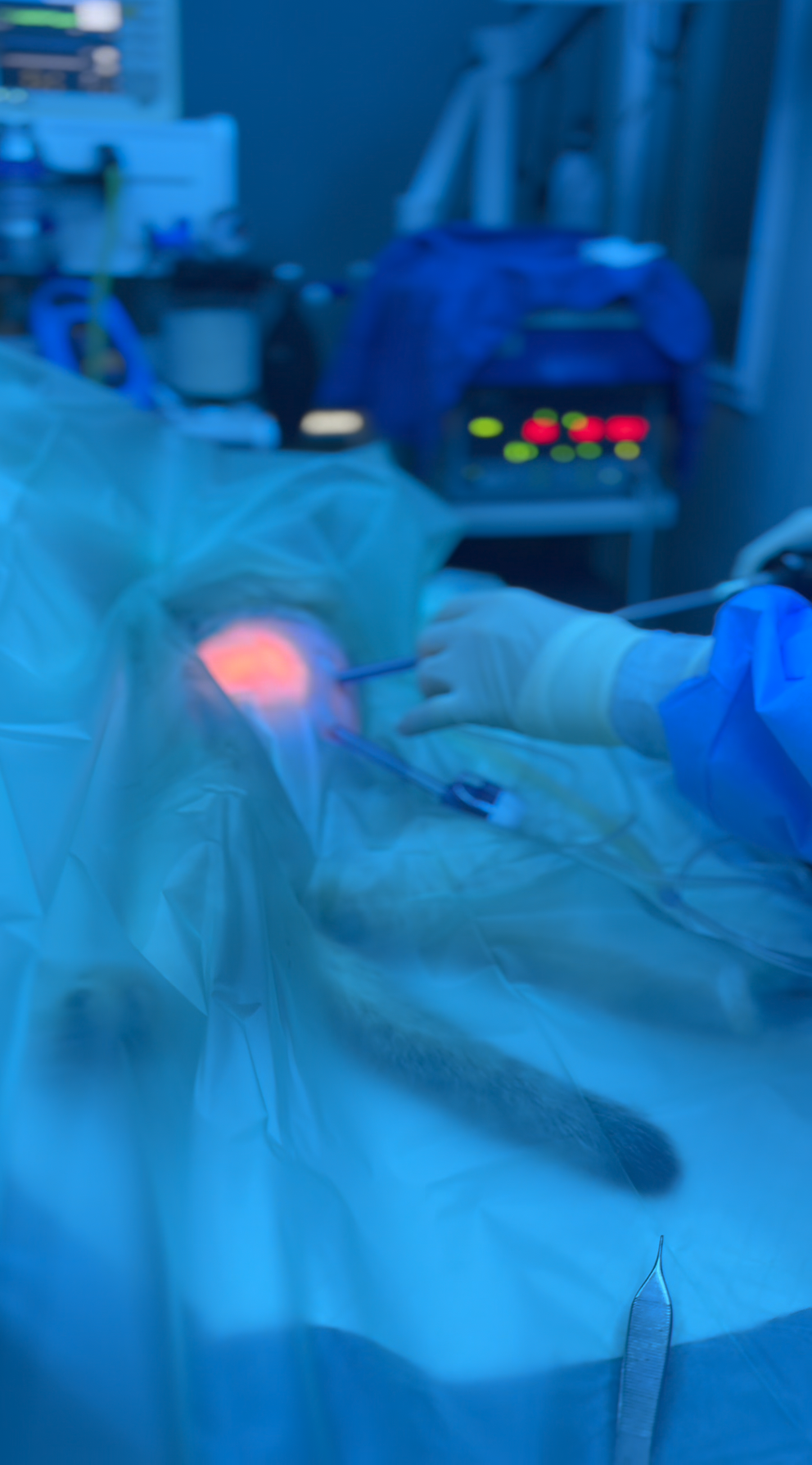
Urethrocystoscopy is a minimally invasive endoscopic procedure that allows direct visualisation of the urethra and urinary bladder. It provides a real-time view of internal structures, making it especially valuable when imaging such as ultrasound or radiography is inconclusive.
In female patients a rigid endoscope is typically used, while male dogs require a flexible endoscope due to their longer urethra. Many conditions including ectopic ureters, urethral sphincter mechanism incompetence, bladder stones and masses can be diagnosed and, in many cases, treated without open surgery. It is performed under general anaesthesia.
Key Benefits
Why this minimally invasive approach is the right choice for your pet.
Minimally invasive
Accesses the bladder without large incisions or open surgery.
Accurate diagnosis
Direct visual identification of stones, masses and abnormalities.
Treat as we look
Many conditions are treated during the same procedure.
In Detail
A closer look at how this procedure works and what it can diagnose and treat.
Why it matters
Disorders of the urinary and reproductive tract can be difficult to diagnose using imaging alone. Endoscopy provides a direct, real-time view of internal structures, and is especially valuable when standard tests such as ultrasound or radiography are inconclusive.
Male and female differences
Due to anatomical differences, the approach varies between patients.
Conditions diagnosed and treated
Modern endoscopic techniques allow not only diagnosis but also treatment of several conditions in many cases without the need for open surgery.
How the procedure works
The procedure is performed under general anaesthesia and is well tolerated and considered very safe when performed by trained specialists.
What to Expect
Initial Investigations
We review history and run initial, non-invasive tests and imaging to confirm the procedure is appropriate and safe.
General Anaesthesia
Your pet is placed under general anaesthesia and carefully monitored to ensure comfort and safety.
Endoscopic Examination
The endoscope is gently introduced and the relevant structures are examined in high detail.
Sampling & Treatment
Biopsies or treatment are carried out during the same procedure where needed, and findings are discussed with you.
At a Glance
Anaesthesia
General
Approach
Minimally invasive
Endoscope
Rigid or flexible
Recovery
Reduced recovery time
When it is recommended
Frequently Asked Questions
Ready to Book UrethroCystoscopy?
Speak with our team about your pet’s care and the right diagnostic approach.