MINIMALLY INVASIVE CARE
Rhinoscopy
A minimally invasive endoscopic examination of the nasal passages and upper airways the gold standard for diagnosing nasal disease.
What is Rhinoscopy?
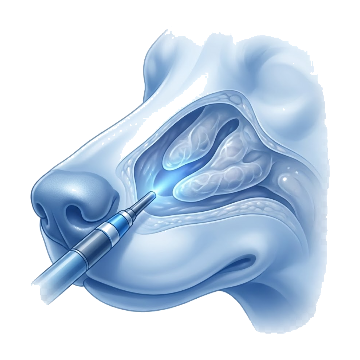
Rhinoscopy is a minimally invasive endoscopic procedure used to examine the nasal passages and upper airways. The nasal cavity is enclosed in bone and filled with delicate turbinates and narrow, blind-ending channels, which makes abnormalities difficult to detect without direct visualisation.
It is considered the gold standard for diagnosing intranasal disease and allows treatment during the same procedure including removal of foreign bodies such as grass seeds, biopsy of suspicious tissue, laser-assisted procedures and treatment of fungal plaques. It is performed under general anaesthesia and is far less invasive than surgical approaches such as rhinotomy.
Key Benefits
Why this minimally invasive approach is the right choice for your pet.
Gold standard
The most reliable method for diagnosing intranasal disease.
Removes foreign bodies
Grass seeds and debris are located and removed on the spot.
Less invasive than surgery
Lower morbidity and faster recovery than open rhinotomy.
In Detail
A closer look at how this procedure works and what it can diagnose and treat.
Why it is important
Nasal disease is relatively common in both dogs and cats, but diagnosing the underlying cause can be challenging due to the complex anatomy of the nasal cavity.
Why choose rhinoscopy over surgery
Surgical approaches such as dorsal or ventral rhinotomy are significantly more invasive. Rhinoscopy is considered the gold standard for diagnosing intranasal disease.
Diagnostic and treatment capabilities
Rhinoscopy allows both diagnosis and treatment during the same procedure.
Procedure and safety
Rhinoscopy is performed under general anaesthesia to ensure comfort and precision. It is safe, minimally invasive and well tolerated in most patients.
What to Expect
Initial Investigations
We review history and run initial, non-invasive tests and imaging to confirm the procedure is appropriate and safe.
General Anaesthesia
Your pet is placed under general anaesthesia and carefully monitored to ensure comfort and safety.
Endoscopic Examination
The endoscope is gently introduced and the relevant structures are examined in high detail.
Sampling & Treatment
Biopsies or treatment are carried out during the same procedure where needed, and findings are discussed with you.
At a Glance
Anaesthesia
General
Approach
Minimally invasive
Standard
Gold standard
Recovery
Faster than surgery
Common signs
Frequently Asked Questions
Ready to book Rhinoscopy?
Speak with our team about your pet’s care and the right diagnostic approach.